

This article is part of a series in which we highlight the key milestones in the development of LOFAR-BG.
Site selection
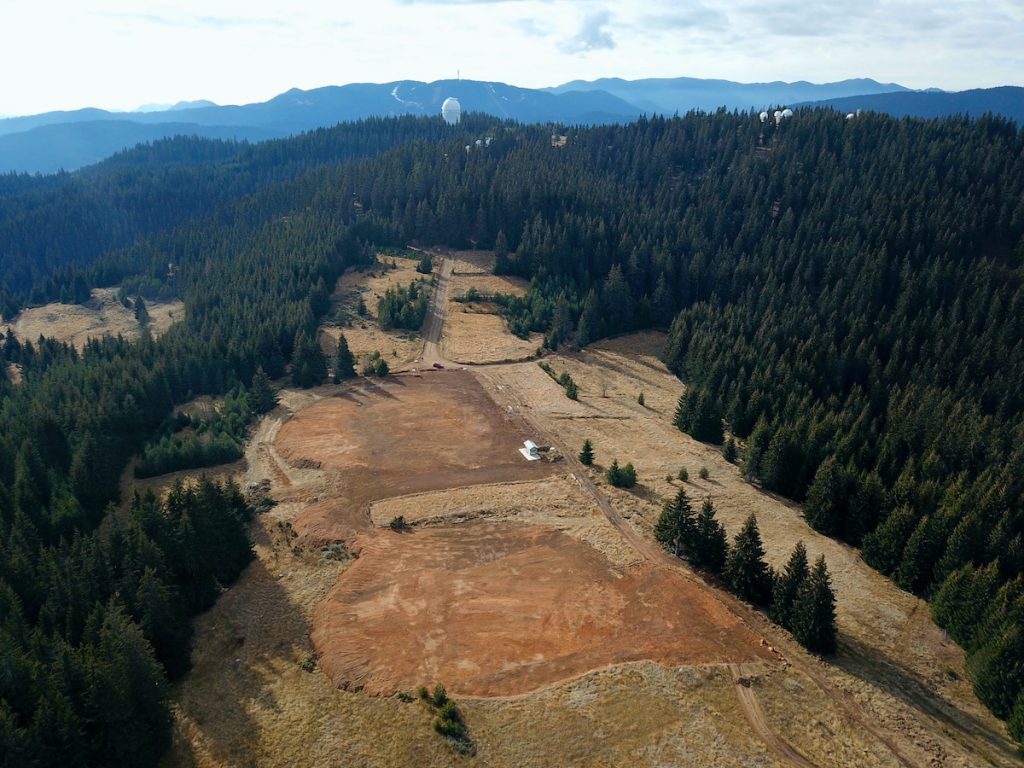
The period 2021–2023 was crucial for transforming LOFAR-BG from a concept into a well-defined infrastructure project. After extensive surveys, measurements, and analysis, the site of the future station was selected near the National Astronomical Observatory Rozhen, close to the village of Progled. This location offers excellent conditions for radio astronomy, including low radio interference and favorable geographical characteristics.
The site selection was the result of close collaboration between the Bulgarian team and international partners, ensuring full compliance with the requirements of the global LOFAR network. The proximity to NAO Rozhen also provides practical advantages for operation, maintenance, and scientific work.
At the same time, a complex land acquisition process was carried out, involving numerous landowners and active coordination with local authorities. Despite administrative challenges, most of the required land was successfully secured, enabling the project to move forward toward construction.
International recognition and first scientific achievements
During this period, Bulgaria also achieved significant international recognition. In 2022, LOFAR-BG became a full member of the International LOFAR Telescope (ILT), allowing participation in governance and development activities. In late 2023, LOFAR ERIC was established as the new European structure for managing the telescope, with Bulgaria as a founding participant.
Scientific activity also developed rapidly. By the end of 2023, a total of 11 scientific publications had been produced in international journals and conferences. Bulgarian teams participated in observing proposals, including long-term programs totaling over 1,000 hours of observations. This demonstrates that Bulgaria already has a tangible scientific presence within the LOFAR community, even before the station is built.